Sleep science · Mattress materials
How Wool Layers Shape Temperature and Comfort in Organic Sleep Systems
Wool can do more than soften the first touch of a bed. Used as upholstery in a mattress or topper, it adds cushioning and can influence how moisture and warmth behave near the sleep surface. Its real-world effect depends on its quantity, construction, and the materials supporting it—not simply on a label that says “natural” or “temperature regulating.”
Published November 17, 2026
In an organic sleep system, materials are arranged in layers, each with a different job. Springs or resilient foam may provide the primary support. Latex can add responsive pressure relief. Cotton often forms the cover or serves as a breathable upholstery fiber. Wool may sit closer to the surface, where it contributes a soft, slightly yielding feel and helps manage moisture around the body.
That division of labor matters. Wool is not usually the mattress’s main support core, and it does not determine comfort by itself. Rather, it is one part of a construction whose overall feel emerges from the interaction between cover, upholstery, comfort layers, support system, foundation, bedding, and sleeper. Understanding those relationships makes it easier to compare organic mattresses without relying on broad promises about “cool sleep” or “perfect support.”
This guide explains what wool layers may contribute, how they work alongside latex and springs, what temperature regulation can—and cannot—mean, and which construction details are worth checking before choosing a sleep system.
What wool does in a mattress
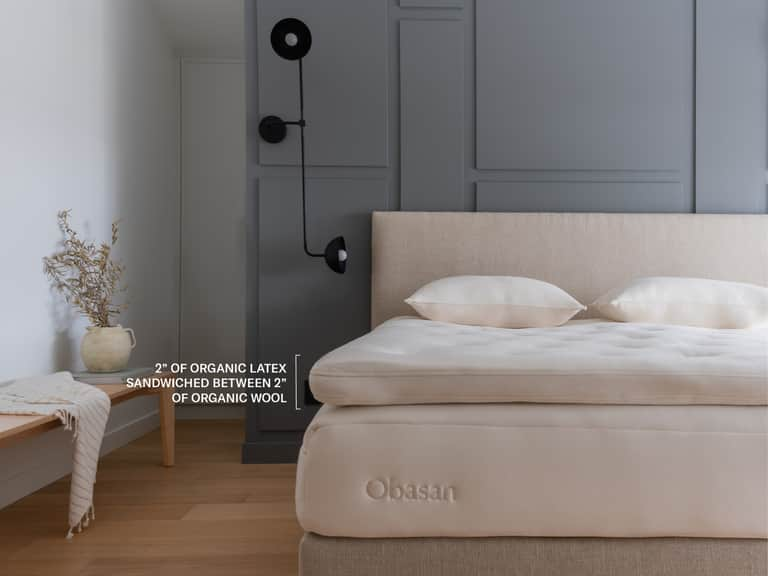
Wool is a natural animal fiber used in mattress upholstery, toppers, and bedding. In a mattress, it commonly appears as batting or a felted, needle-punched layer beneath the ticking—the outer fabric cover. It can also be blended with other fibers or placed between distinct comfort and support components.
Its first contribution is tactile: wool can provide a cushioned transition between the cover and firmer layers underneath. A thin layer may create a little surface softness without dramatically changing the deeper support. A thicker or more generously padded layer can make the bed feel plusher, although the result also depends on the density and firmness of the latex, springs, or other components below it.
Wool fibers are also hygroscopic: they can take up water vapor from the surrounding air. In a sleep setting, this property is often discussed as a way wool may help manage moisture near the body. That is not the same as removing all perspiration or keeping every sleeper cool. It describes a material behavior, not a guarantee about an individual’s temperature through the night.
Wool’s structure and the way it is processed affect how a layer behaves. Fiber length, density, thickness, compression, quilting, and the surrounding fabrics all matter. “Wool layer” alone does not tell you enough to predict the feel or performance of a mattress.
Temperature regulation is about the whole sleep system
People often use “temperature regulation” as shorthand for staying comfortable, but sleep temperature is influenced by several things at once. The room, pajamas, bedding, mattress cover, body heat, airflow, humidity, and personal preferences can each change the experience. A material may affect how warmth and moisture are handled at the surface, but it cannot control all these variables.
Wool can help absorb and release moisture vapor in response to its surroundings. This may contribute to a less clammy surface for some sleepers, particularly compared with materials that feel less breathable in a particular construction. But outcomes are not universal. A person who sleeps hot may still feel warm on a wool-upholstered mattress if the room is hot, bedding is heavy, or the full mattress construction retains more heat than they prefer.
Airflow is another important part of the equation. A breathable cover and an open structure beneath it may allow heat and moisture to move differently from a tightly layered or heavily quilted design. Wool’s presence does not automatically make a mattress ventilated. The density of the upholstery, the ticking, and the underlying layers can change how freely air moves through the surface.
For a useful comparison, treat cooling claims as prompts to investigate rather than as conclusions. Ask what the cover is made from, where the wool sits, how thick the layer is, and what materials surround it. If possible, test the mattress in a setting that reflects how you sleep, using a similar pillow, protector, and bedding setup.
Wool and responsive support materials
Wool is most informative when considered alongside the materials beneath it. In a latex mattress, latex commonly supplies resilient pressure relief and a buoyant response. In a pocket-spring mattress, individually encased coils may provide the core support and respond to movement at different points. In a hybrid, these materials can be combined, with upholstery layers shaping the feel at the surface.
Wool can soften the first impression of these systems, but it does not replace the support function of latex or springs. A wool layer may compress under body weight while the deeper structure manages alignment and resistance. If the bed feels too firm, wool upholstery might add surface cushioning, yet it may not address a mismatch in the mattress’s underlying support or comfort configuration.
Likewise, adding wool does not automatically make latex feel softer or springs feel more supportive. The result depends on the full stack: a thin wool layer over a firm latex core may feel quite different from substantial wool upholstery above a spring unit and additional comfort layers. For people comparing products, the most helpful descriptions specify the position, thickness, and role of each layer.
Some designs combine wool with other natural fibers. Horsetail, cotton, silk, or mohair may appear in upholstery stacks, each contributing its own texture and cushioning characteristics. In a detailed construction description, these materials should be presented as parts of a layered design rather than as interchangeable signals of quality. More materials do not necessarily mean a better match for a particular sleeper.
Comfort is personal, not a material label
Mattress comfort is a response between a person and a sleep surface. Body shape, weight distribution, preferred sleeping position, movement during the night, and sensitivity to pressure all influence what feels comfortable. Wool may change the surface feel, but a single description such as “plush” or “supportive” cannot predict how every person will experience it.
Side sleepers often pay close attention to cushioning around the shoulder and hip, where pressure can be more noticeable. Back sleepers may focus on how evenly the surface supports the body. Stomach sleepers may prefer a surface that does not allow the midsection to sink excessively. These are broad considerations, not strict rules: individual needs vary, and the mattress’s complete construction remains important.
Consider wool’s role as part of the comfort layer rather than as a stand-alone answer to alignment or pressure relief. A wool surface can feel gently cushioned, but a sleeper’s position and body proportions determine how that cushion interacts with the firmer components underneath. A topper can also alter the feel of an existing mattress, though it cannot correct every underlying support problem.
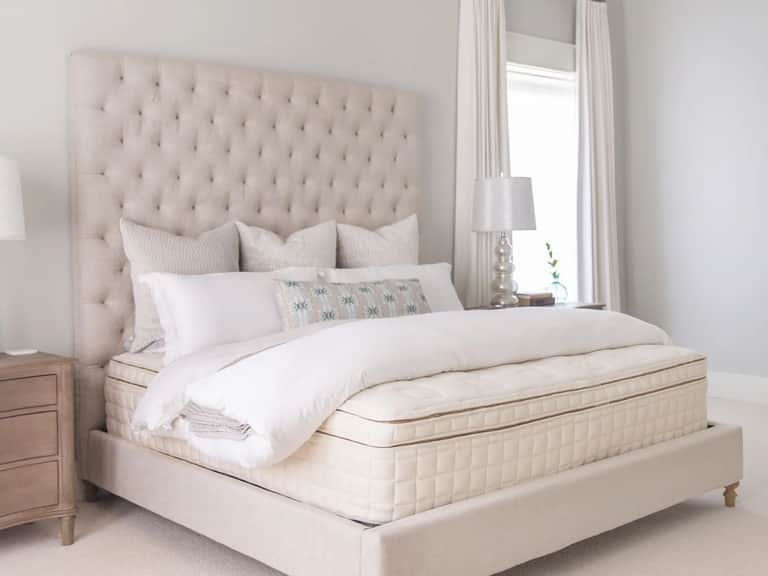
When a mattress is adjustable or modular, layer selection can make comparisons more practical. For example, the Naturepedic EOS Pillowtop Organic Hybrid Mattress is described as combining organic cotton and wool in its quilt with customizable latex and pocketed coils beneath. Its listed construction illustrates why wool should be evaluated as one element in a larger system: the surface upholstery, latex comfort layer, and coil support layer each have a distinct role.
Wool in mattresses, toppers, and pillows
Wool can appear in several sleep products, and the amount of material and its purpose differ by product type. A mattress may use wool within its quilt or upholstery stack. A topper may add a more noticeable layer of cushioning to an existing bed. A pillow may wrap a latex core in wool, combining the springy support of the core with a softer outer layer.
These applications should not be treated as equivalent. A pillow’s wool wrap affects the feel close to the head and neck, while mattress upholstery is spread across a larger surface and interacts with the body’s weight and the mattress’s support system. A topper can change the surface of a mattress without changing its internal spring or latex structure.
Construction details also shape care. A washable cover does not necessarily mean the wool or latex inside can be washed. Many natural-material components require spot cleaning or careful air drying, and direct heat or prolonged sunlight may be discouraged. Before buying, check the care instructions for each component rather than assuming that the whole item is machine washable.
Protectors and sheets influence the experience as well. A thick protector or tightly fitted layer can change the way a mattress surface feels and may affect airflow or moisture movement. If temperature is a concern, consider the complete bedding arrangement—not only the mattress label.
How to compare wool layers in organic mattresses
Clear specifications make it easier to distinguish an actual construction description from general marketing language. When reviewing a mattress, topper, or hybrid, look for details such as the wool’s location, thickness or weight, fiber composition, and how the layer is secured. If a manufacturer gives only a broad claim, it is reasonable to ask for more information.
- Layer position: Find out whether wool is in the quilt, directly beneath the cover, between comfort layers, or elsewhere in the build.
- Quantity and thickness: A small amount of wool may influence the surface differently from a thick layer. The exact measurement can help set expectations.
- Construction method: Ask whether the wool is quilted, needle-punched, blended, or arranged as loose fill. These details can affect texture and stability.
- Materials beneath it: Identify whether the primary support comes from latex, springs, or another core, and how the comfort layers are configured.
- Cover and ticking: Cotton, viscose, and other cover materials can influence the feel and movement of moisture at the surface.
- Sourcing and certification: Look for specific, verifiable information about fiber sourcing and any certifications claimed for the product.
- Care instructions: Confirm how to protect, clean, rotate, or air the item and whether the wool layer can be accessed or replaced.
- Trial and adjustment options: Where available, understand the terms for testing a mattress or changing modular layers before committing.
It is also useful to distinguish certification of a material from certification of an entire product. A certificate may apply to a specific fiber, textile, or manufacturing process rather than every component in a mattress. Read the scope of the claim, and check whether the seller explains which parts are covered.
Organic does not mean identical
“Organic mattress” can describe a product built from a range of materials and construction choices. Two mattresses may both use organic cotton and wool yet feel very different because their layer thicknesses, latex firmness, spring design, quilting, and overall height differ. Organic sourcing may matter to a buyer, but it does not establish that a mattress will suit every body or sleep preference.
Labels and certifications can provide useful information, especially when they identify a standard and the material or process it covers. Still, certification does not by itself prove a mattress is cooler, softer, more durable, or medically beneficial. Those are separate performance questions that require relevant evidence and, for comfort, personal evaluation.
It is wise to read claims precisely. A statement that a material is natural or organic is about composition or sourcing, not a guarantee of a particular sleep outcome. Similarly, language such as “hypoallergenic” should not be read as a promise that no individual can react to the product. People with known sensitivities should review ingredient and care information carefully and consult an appropriate health professional when needed.
Durability, compression, and maintenance
Wool is a compressible upholstery fiber. Over time, repeated loading can change the loft or feel of a padded surface. How noticeable that change becomes depends on the layer’s construction, amount, quilting, overall mattress design, and how the bed is used. A detailed product description may explain how layers are anchored or held in place, but no material is immune to wear.
Careful maintenance starts with the manufacturer’s instructions. Use a suitable protector if recommended, keep liquids away from the mattress, and avoid washing components that are marked spot-clean only. Some designs benefit from rotation, while others should not be flipped because their layers are arranged for one-sided use. The guidance for the specific product should take priority over generic advice.
For a topper, check how it is secured and whether its weight or thickness could shift during normal use. For a mattress, verify the foundation requirements; an unsuitable or uneven base can affect the way a mattress performs regardless of the upholstery materials. Good care preserves the sleep surface, but it cannot replace a sound match between the mattress and sleeper.
A practical checklist for shoppers
Before comparing options, write down what you want the wool layer to do. You might be looking for a softer surface, an alternative to synthetic upholstery, or a particular combination of breathable fibers and resilient support. Defining the goal helps prevent a material name from taking the place of a comfort decision.
- Describe your current mattress experience: too firm, too soft, too warm, or uncomfortable in a specific position.
- Separate the surface question from the support question. A topper may alter cushioning, while deeper support depends on the mattress construction.
- Ask for a layer-by-layer description, including wool location and quantity where available.
- Compare the underlying support system and comfort layers, not just the cover materials.
- Review care, foundation, warranty, and trial terms in writing.
- Evaluate the mattress with bedding similar to what you use at home.
- Be cautious of absolute claims about temperature, pain relief, or suitability for everyone.
If you cannot try the mattress in person, detailed construction information and a clearly explained return or adjustment policy become especially valuable. When testing is possible, allow enough time to assess the bed across different nights rather than deciding from a brief first impression alone.
The bottom line on wool and sleep comfort
Wool can be a useful upholstery material in an organic sleep system. It may add a cushioned surface, absorb and release moisture vapor, and work alongside cotton, latex, springs, and other fibers. But its influence depends on how much is used, where it sits, and what the rest of the mattress is made to do.
For a more confident comparison, look past a single phrase such as “temperature regulating.” Ask how the layers are arranged, identify the material responsible for support, and consider the cover and bedding as part of the same sleep environment. Then match those construction details to your own comfort preferences and care needs.
A thoughtfully made mattress is not defined by wool alone. The most useful choice is the one whose materials are clearly described, whose support and surface feel suit you, and whose claims are presented with enough detail to evaluate.
Frequently asked questions
Does wool make an organic mattress cooler?
Wool can take up moisture vapor and may contribute to a comfortable surface, but it cannot guarantee a cooler night. Room temperature, bedding, cover fabric, mattress construction, and personal sleep habits all matter.
Is wool the support layer in a mattress?
Usually, wool is used as upholstery or cushioning rather than as the primary support core. Latex, pocketed springs, or another structural layer typically performs the main support role.
Can wool change how latex feels?
Yes, a wool layer can alter the surface feel above latex, but the amount and placement matter. The latex firmness, thickness, and other layers also affect the final feel.
What should I check when comparing wool mattress layers?
Check the layer’s location, thickness or weight, construction method, sourcing information, care requirements, and the materials beneath it. A clear description is more useful than a broad performance claim.